
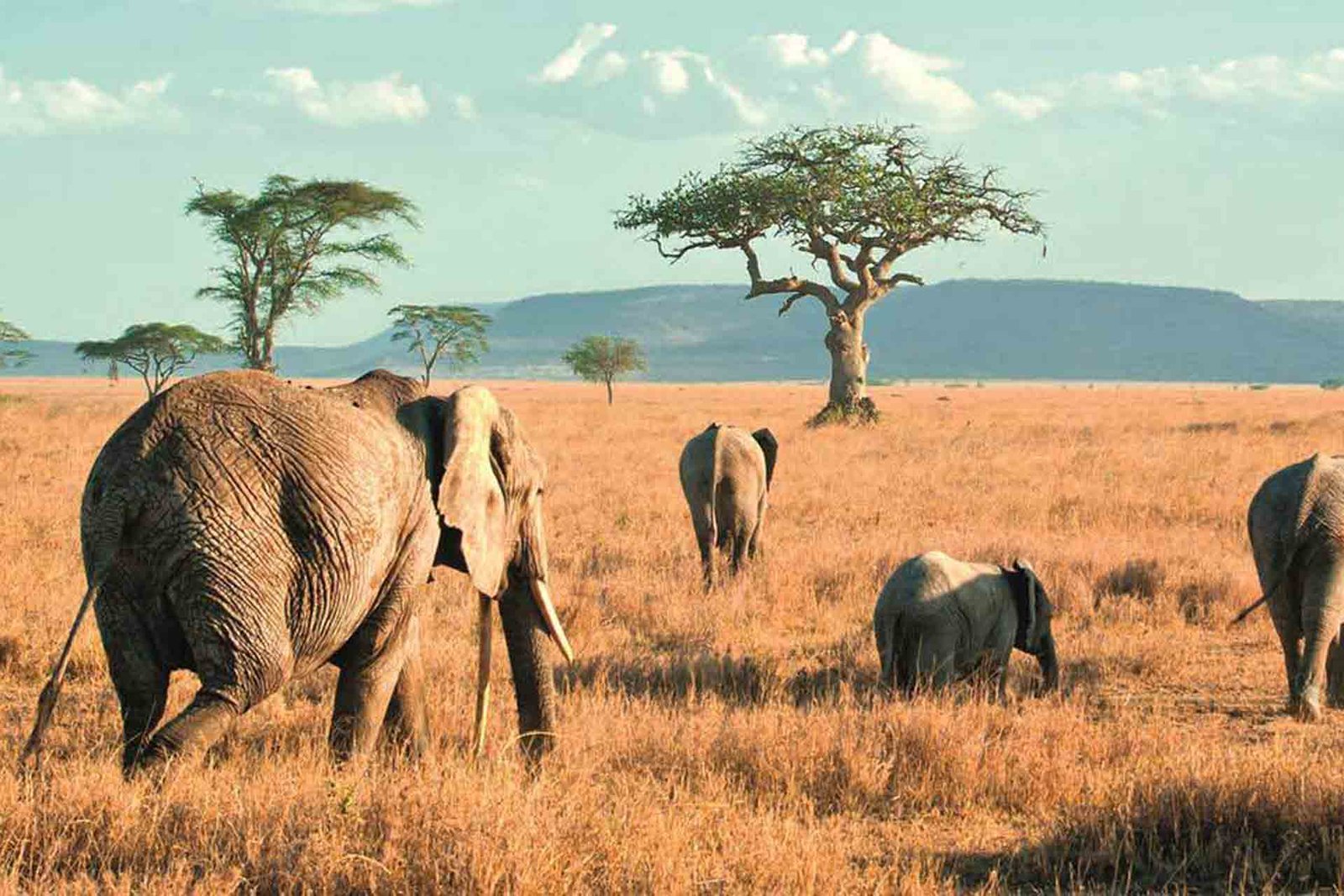
Tarangire National Park is one of northern Tanzania’s most distinctive safari destinations. It is a land of ancient baobab trees, golden grass, elephant herds and the life-giving Tarangire River.
The park has a quieter, more intimate feeling than Serengeti. Its scenery is shaped by giant baobabs with thick trunks and wide branches, rolling woodland, seasonal swamps and river valleys where animals gather. It is a place where you can watch elephants for long periods without feeling the need to rush onward.
At Serengeti Soul Adventure, we often include Tarangire at the beginning of a northern Tanzania safari. It is close enough to Arusha for a comfortable first day, but rich enough in wildlife to feel like a proper safari from the moment you enter the park.
Tarangire is especially known for elephants. You may see large family groups crossing the road, young calves walking close to their mothers or older bulls standing quietly in the shade of a baobab. But elephants are not the only reason to visit. The park is also home to lions, leopards, cheetahs, giraffes, zebras, buffalo, wildebeest, impala, warthogs and an impressive range of birds.
Why Visit Tarangire National Park?
Tarangire is a strong choice for travellers who want a different side of Tanzania’s wildlife.
The park is less about endless open plains and more about details: elephant tracks in the dust, a family group drinking at the river, a giraffe moving between acacia trees or a lion resting in tall grass.
During the dry season, Tarangire becomes especially rewarding because the river acts as an important water source for wildlife. Many animals move toward the river valleys and permanent water areas, making game viewing excellent.
Tarangire is ideal for travellers who want:
- Large elephant herds and close wildlife encounters
- Iconic baobab-tree scenery
- A good first or final day of northern Tanzania safari
- Strong dry-season game viewing
- Birdwatching and varied habitats
- A family-friendly safari destination
- A combination with Ngorongoro Crater, Lake Manyara or Serengeti
The Tarangire River: The Heart of the Park
The Tarangire River is the lifeline of the national park, especially during the dry season.
From around June to October, many animals are drawn toward the river and nearby water sources. Elephants come to drink and bathe, buffalo gather in groups, zebras and wildebeest graze nearby, and predators follow the movement of prey.
A game drive along the river can be one of the most rewarding parts of a Tarangire safari. Your guide may stop quietly to watch elephants at the water, scan the trees for leopards or look for lions moving through the grass.
The river is not always easy to see from every road, but its influence can be felt throughout the park. It shapes where animals feed, rest and move during the day.
Ancient Baobab Trees
Tarangire’s baobab trees are one of the park’s most recognisable features. Their huge trunks, unusual branches and long lives give the landscape a character that feels almost prehistoric.
Some baobabs appear to be standing upside down, with bare branches spreading upward like roots. Others have wide hollow trunks marked by time, weather and the movement of animals around them.
Elephants often feed near baobabs and sometimes rub against their trunks. Giraffes, zebras and antelope can be seen grazing nearby, creating scenes that are especially beautiful in the early morning or late afternoon light.
For photographers, Tarangire’s baobabs give every game drive a strong sense of place. They are not simply background trees—they are part of what makes the park feel different from any other safari destination in Tanzania.
Wildlife in Tarangire National Park
Tarangire has a rich mix of wildlife, and the best sightings depend on the season, weather and natural movement of animals.
Elephants
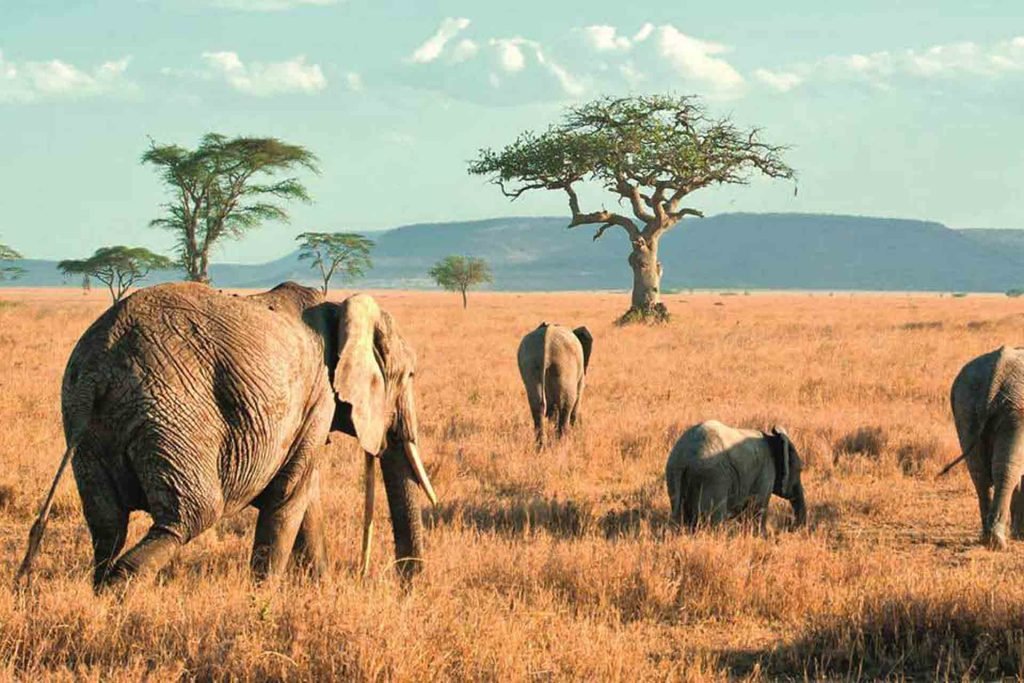
Elephants are Tarangire’s best-known residents. The park is home to large elephant populations, and sightings are common throughout the year. During the dry season, several family groups may gather near water or move through woodland together.
Watching elephants is always different. Young calves may play in the dust, mothers may protect their babies, and large bulls may stand apart from the herd. Your Serengeti Soul Adventure guide will keep a respectful distance and allow you time to observe their natural behaviour.
Lions, Leopards and Cheetahs
Lions are present in Tarangire and may be seen resting beneath trees, moving through the grass or watching prey near the river. Leopard sightings are possible, particularly in woodland and riverine areas, although these cats are naturally elusive.
Cheetahs may also be seen in open grassland areas. As with every safari destination, predator sightings can never be guaranteed, but Tarangire provides good habitat and strong wildlife movement.
Giraffes, Zebras and Buffalo
Giraffes are often seen feeding from acacia trees, while zebra and wildebeest move through open grassland. Buffalo may gather in herds near water sources or rest in the shade.
Other animals include impala, hartebeest, waterbuck, reedbuck, warthogs, mongoose, vervet monkeys and baboons.
Smaller and Less Common Wildlife
Tarangire is also known for animals that are not always easy to see in other northern Tanzania parks. Depending on luck and the area explored, you may spot fringe-eared oryx, gerenuk, greater kudu, dik-dik or African wild dog.
These sightings are never promised, but they are part of what makes Tarangire rewarding for travellers who enjoy looking beyond the most famous safari animals.
Birdwatching in Tarangire
Tarangire is a wonderful park for birdwatchers. Its river, swamps, grassland and woodland habitats support a wide variety of birdlife.
You may see ostriches, hornbills, vultures, eagles, weavers, bee-eaters, storks, herons, kingfishers and colourful rollers. The park is particularly rewarding during and after rainy periods, when migratory birds may be present and the landscape becomes greener.
Even guests who do not consider themselves birdwatchers often find Tarangire’s birds difficult to ignore. From large Secretary Birds walking through the grass to bright lilac-breasted rollers on roadside branches, there is always something to notice.
A Typical Tarangire Safari Day
A Tarangire safari usually begins with a morning departure from Arusha, depending on where you stayed the night before. The drive to the park takes around two to three hours, passing through small towns, Maasai land and open countryside.
After entering the park, the game drive begins immediately. Your guide will follow roads through woodland, river valleys and open areas, watching for wildlife and responding to fresh tracks or recent sightings.
A picnic lunch can be enjoyed at a designated place inside the park. After lunch, the game drive continues, often focusing on the Tarangire River or swamp areas where animals may be gathering.
By late afternoon, you may continue to your lodge in Tarangire, Mto wa Mbu, Karatu or another planned destination. Tarangire can be enjoyed as a full-day safari, but staying nearby allows for a more relaxed pace and an earlier start the following morning.
Tarangire as Part of a Northern Tanzania Safari
Tarangire is often the first park in a classic northern Tanzania itinerary because it is conveniently located from Arusha and gives visitors an immediate wildlife experience.
Tarangire and Lake Manyara
These parks work well together because their landscapes are very different. Tarangire has baobabs, elephants and dry woodland, while Lake Manyara offers groundwater forest, baboons, birdlife and the Great Rift Valley Escarpment.
Tarangire and Ngorongoro Crater
Tarangire and Ngorongoro Crater are often combined in a short safari. Tarangire gives you spacious woodland and elephant viewing, while Ngorongoro provides dense wildlife viewing inside the crater floor.
Tarangire, Serengeti and Ngorongoro
This is one of Tanzania’s best classic safari combinations. You begin with Tarangire’s elephants and baobabs, continue to Serengeti’s open plains and finish with a crater game drive in Ngorongoro.
Tarangire Family Safaris
Tarangire is especially suitable for families. The elephant sightings are exciting for children, the scenery changes often and game drives can be adjusted to suit the family’s pace.
Serengeti Soul Adventure can arrange family-friendly lodges, private vehicles, flexible game-drive times and room arrangements for children and parents.
Best Time to Visit Tarangire National Park
Tarangire can be visited throughout the year, but its character changes with the seasons.
Dry Season: June to October
The dry season is one of the best times to visit Tarangire. As water becomes limited in surrounding areas, wildlife is drawn toward the Tarangire River and permanent water sources.
Elephant herds can be particularly impressive during this time, and the thinner vegetation may make animals easier to spot. The weather is generally dry, though mornings and evenings can be cool.
Green Season: November to May
The green season brings rain, fresh grass and a more colourful landscape. The park becomes lush, birdlife can be especially rewarding and there are usually fewer safari vehicles.
During the rainy months, some animals may spread out more widely because water is available in many areas. Wildlife viewing remains good, but the experience feels greener and quieter.
When to See Elephants in Tarangire
Elephants can be seen in Tarangire throughout the year. However, the dry season from around June to October is particularly well known for large herds gathering around water sources.
How to Get to Tarangire National Park
Tarangire is located in northern Tanzania and is usually reached by road from Arusha. The drive takes approximately two to three hours, depending on traffic, road conditions and stops.
It is easy to include Tarangire in a private safari route such as:
Arusha → Tarangire → Lake Manyara or Karatu → Ngorongoro Crater → Serengeti
Serengeti Soul Adventure can organise airport pickup, Arusha hotel stays, private safari transport, park entry fees, accommodation and all game drives as part of one complete Tanzania itinerary.
Where to Stay Near Tarangire
Accommodation can be arranged inside or close to Tarangire National Park, depending on your preferred style and budget.
Staying close to the park allows you to enjoy early morning or late afternoon game drives without spending too much time on the road. Guests looking for more options may also stay around Mto wa Mbu or Karatu, depending on the next destination in their safari route.
We can arrange:
- Budget camping safaris
- Comfortable mid-range lodges and tented camps
- Luxury tented camps near Tarangire
- Family rooms and private cottages
- Honeymoon stays with private dining or special arrangements
Your Serengeti Soul Adventure quotation will show the exact accommodation names, room category and meal plan before booking.
What to Pack for Tarangire Safari
Tarangire can be warm and dry during the day, especially in the dry season. Mornings and evenings may be cooler, particularly if your safari starts early.
Bring comfortable neutral-coloured clothing, a light jacket, sunscreen, hat, sunglasses, closed shoes, camera and personal medication. Binoculars are useful for birdwatching and viewing animals across open grassland.
For families, a small day bag with snacks, water and personal items helps keep everyone comfortable during the game drive.
Why Visit Tarangire with Serengeti Soul Adventure?
Tarangire is not only a park to add because it is close to Arusha. It deserves time because it offers its own wildlife story: elephants at the river, lions in the grass, baobabs against the sky and quiet roads through woodland.
At Serengeti Soul Adventure, we plan Tarangire as part of a route that makes sense for your travel days. We can include it in a one-day safari, a short private Tanzania safari, a family holiday or a longer journey through Serengeti and Ngorongoro.
Our driver-guides understand the park’s landscapes and wildlife areas. They help you slow down when the moment calls for it and make sure you experience more than just a checklist of animals.
Plan Your Tarangire National Park Safari
Tarangire National Park can be visited as a day trip from Arusha or included in a longer northern Tanzania safari. It combines beautifully with Lake Manyara, Ngorongoro Crater, Serengeti National Park, Mount Kilimanjaro and Zanzibar beach holidays.
Tell Serengeti Soul Adventure your travel dates, number of travellers, accommodation preference and interests. We will create a Tarangire safari itinerary that suits the way you want to travel.
Frequently Asked Questions About Tarangire National Park
What is Tarangire National Park famous for?
Tarangire is famous for its large elephant herds, ancient baobab trees, Tarangire River, dry-season wildlife viewing and rich birdlife.
When is the best time to visit Tarangire?
The dry season from around June to October is particularly good because many animals gather near the Tarangire River and permanent water sources. The park is rewarding throughout the year.
Can I see lions in Tarangire?
Yes. Lions are present in Tarangire, and sightings are possible during game drives. However, wildlife sightings always depend on natural movement and cannot be guaranteed.
Is Tarangire good for families?
Yes. Tarangire is excellent for families because of its elephants, varied scenery and flexible private game drives.
How many days do I need in Tarangire?
One full day is enough for a strong introduction to the park. Two nights near Tarangire allow for a more relaxed pace and early morning game drives.
Can I combine Tarangire with Serengeti and Ngorongoro?
Yes. Tarangire, Serengeti and Ngorongoro Crater are among Tanzania’s most popular safari combinations. Serengeti Soul Adventure can arrange the complete route.